This living archive gathers my choreographic work as traces of care, protest, and listening. Rather than documenting finished works, it holds ongoing relations between bodies, places, histories, and futures.
Choreography becomes a future-oriented relational practice, cultivating attention, care, and collective imagination, where movement becomes a way to stay with what is part of life movements: migration, birth, loss, resistance, intimacy, and survival. My practice is rooted in long-term processes, community-based work, and expanded formats that unfold in homes, public space, institutions, and landscapes.
This archive is alive. It grows through repetition, return, and re-activation.
Personal intention
I am interested in inviting time in different forms to my work, that is to allow the body to remember what has been silenced or fragmented and in that cracks the work is investigated. I am interested in how care can be a choreographic method, and how healing does not oppose resistance but moves through it.
My intention is to create conditions where:
bodies can be witnessed without being consumed,
movement can carry political memory,
and art can function as a shared practice of responsibility.
I return again and again to questions of: migration and exile, the transformative body, collective grief and tenderness, and choreography as a form of social infrastructure.
Living works (selected) the eight eyed wheel-movement vocabulary 2020-ongoing
Collaboration with The stage as a page Performed at INDEX, Stockholm
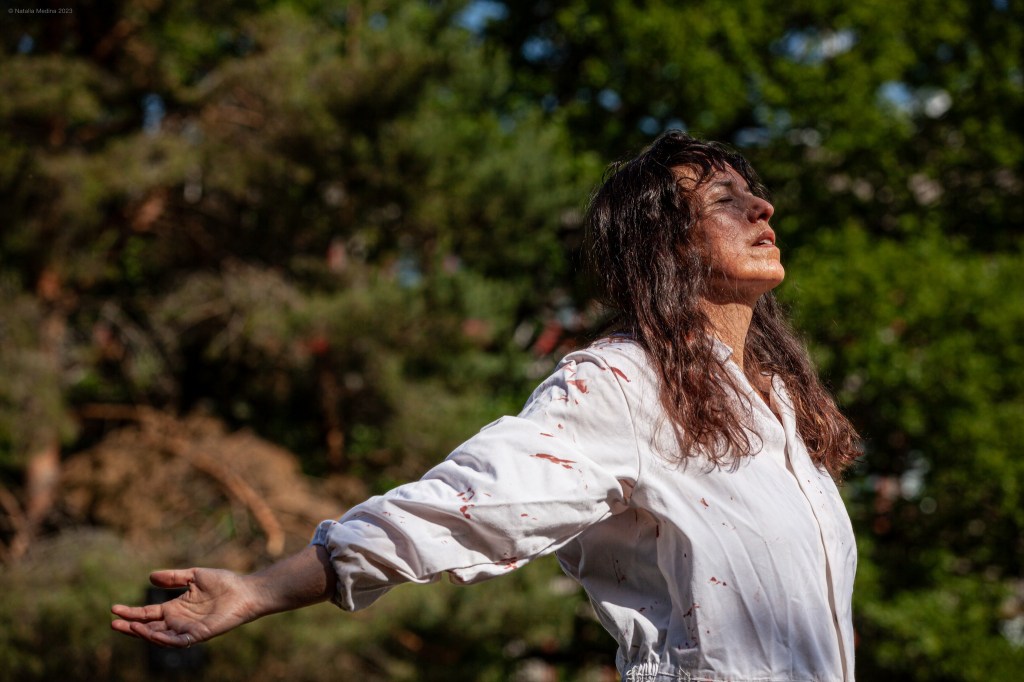
The Eight Eyed Wheel was activated as a live choreographic page, where the stage functioned as a site for reading, writing, and moving simultaneously. The work unfolded as a performative extension of the choreographic research developed through long-duration practice and publication.
During this activation, I performed the movement vocabulary of The Eight Eyed Wheel while inviting the audience to actively participate. Spectators were gradually guided into the work, engaging physically with selected movement positions and becoming co-holders of the choreographic knowledge. Through participation, the audience shifted from observers to embodied readers of the choreography.
The work explored how a choreographic score can circulate between body, page, voice, and collective presence, emphasizing choreography as a shared language rather than a fixed form. The movement vocabulary—cyclical, repetitive, and relational—allowed participants to experience how embodied memory, care, and attention emerge through collective activation.
This presentation at INDEX positioned The Eight Eyed Wheel within the living archive as:
a participatory choreographic system
a bridge between performance, publication, and audience
a practice where knowledge is transmitted through doing, sensing, and repeating.
Long-duration performance and movement vocabulary Haninge Konsthall; Sweden Created together with dancer Ninoska Benavides, this 62-hour performance activates a vocabulary of protest gestures and healing repetition. Through endurance and care, the political body slowly takes form.
This work continues to live through re-performances, workshops, and archival activation.
The laboratory starting at 2018-
Laboratory 2018Laboratory 2018Laboratory and pic from short film 2018
En koreografisk intervention (2021–ongoing)
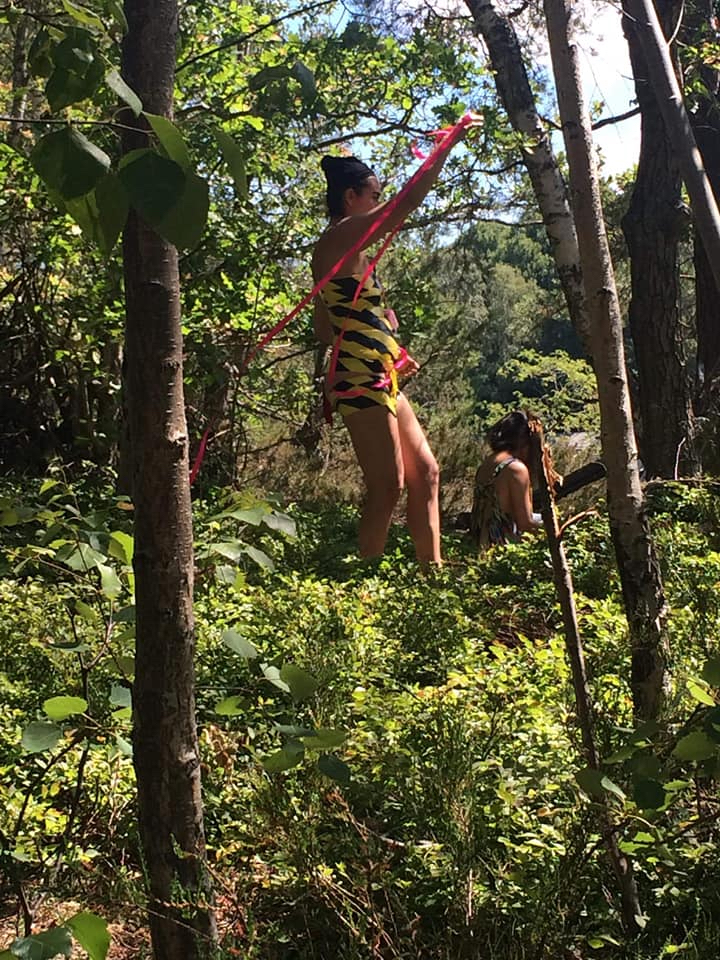
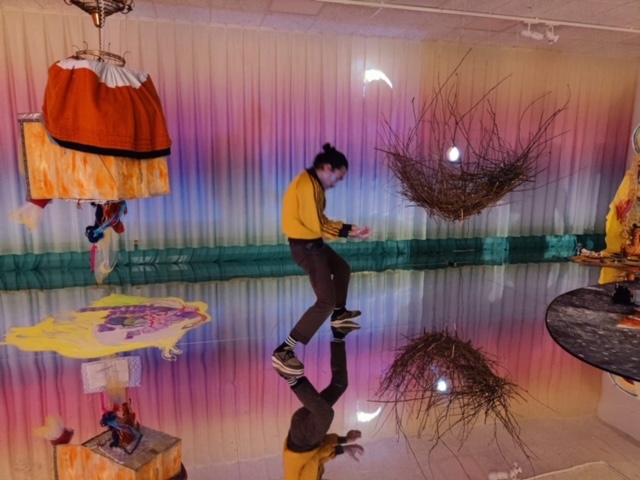
Expanded choreography, site-specific, Stockholm, Gothenburg, Madrid A choreographic practice developed in dialogue with plant life and metamorphosis. Movement unfolds slowly, allowing the work to adapt to each site, urban backyards, historical gardens, and botanical spaces.
The work resists fixed form and grows with each context.
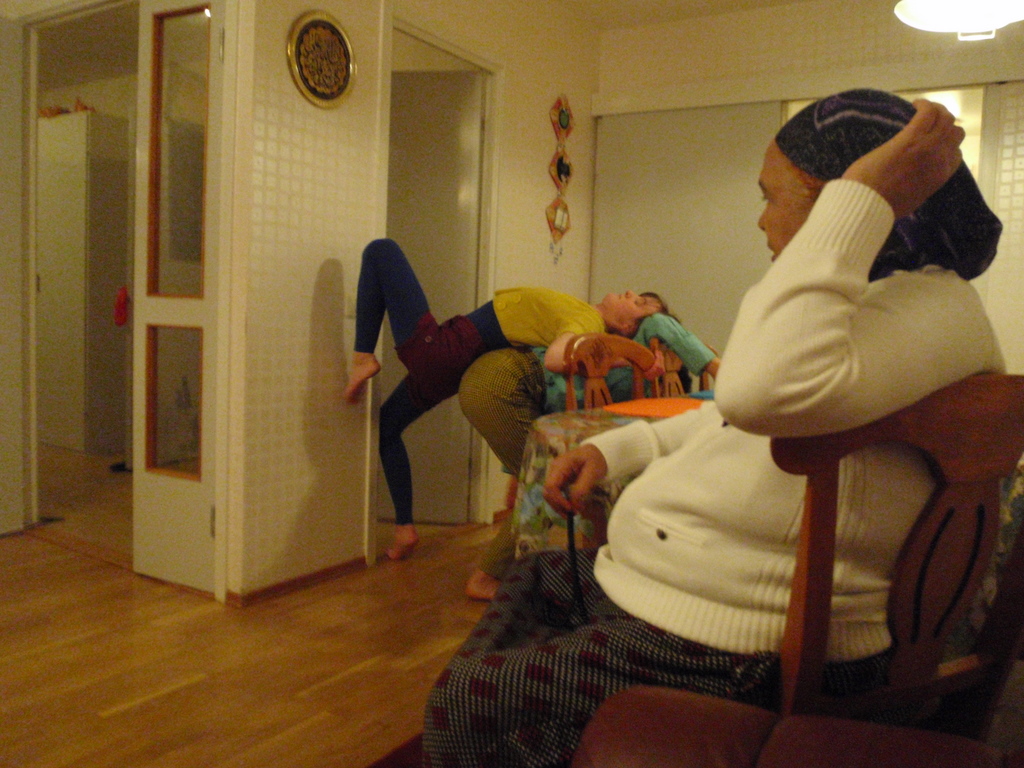
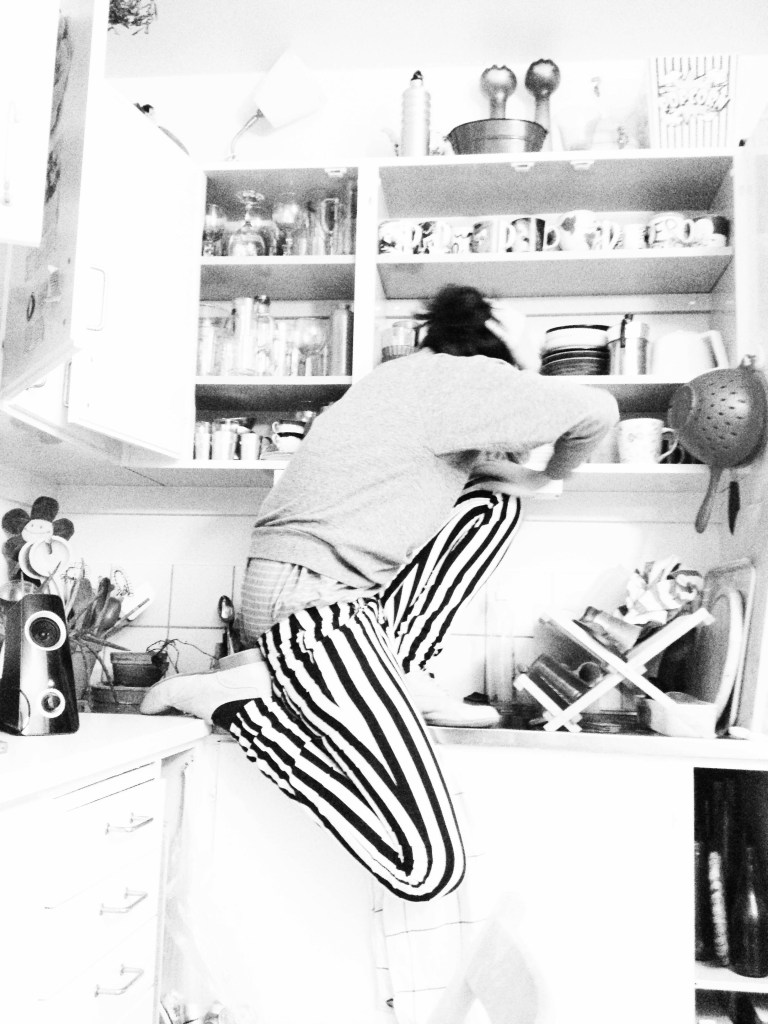
Dans i lägenhet (2008–ongoing)
A performance borrowed like a book Dancers enter a private home. The home and borrower becomes part of a shared choreography of listening, proximity, intimacy and care.
This work continues to be activated internationally and will be permanently available through library systems, treating dance as a public commons.
Pato Negro / Black Duck (2019–2020)
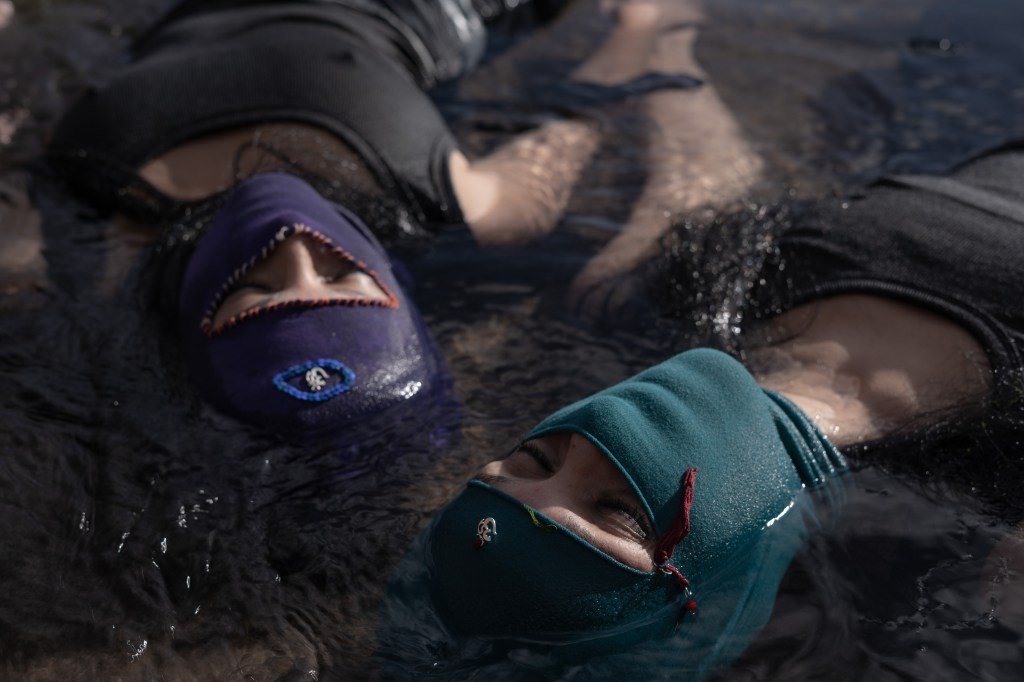
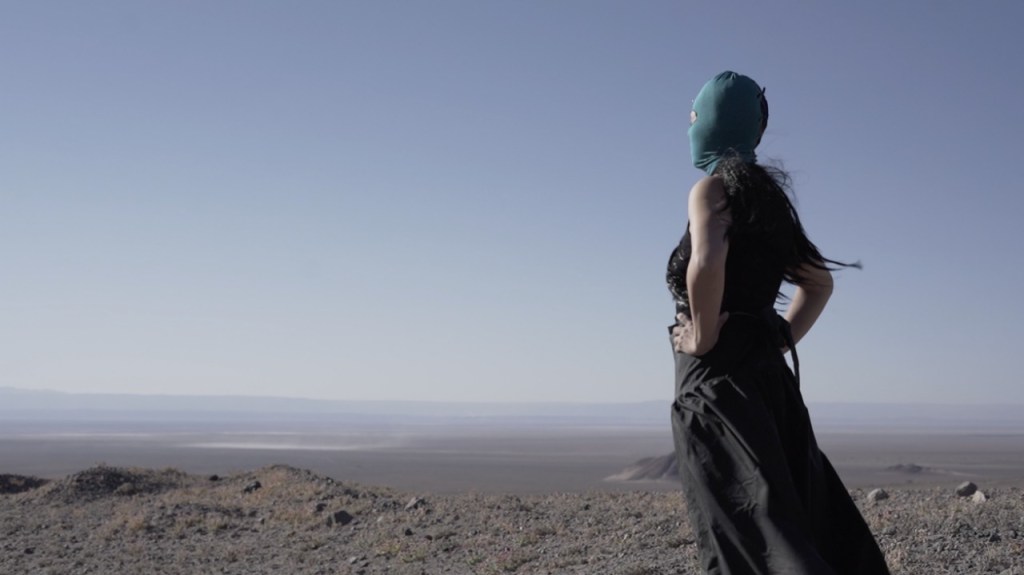
Dance film, Chile / Sweden Filmed in the Atacama Desert, this work navigates the crack between worlds where survival, memory, and transformation are inseparable.
Two figures in brightly colored head coverings float serenely in water, embodying themes of healing and connection.Pato negro/Black duck AtacamaPato negro/Black duck, Atacama
Dansa för mig (2019–2022)
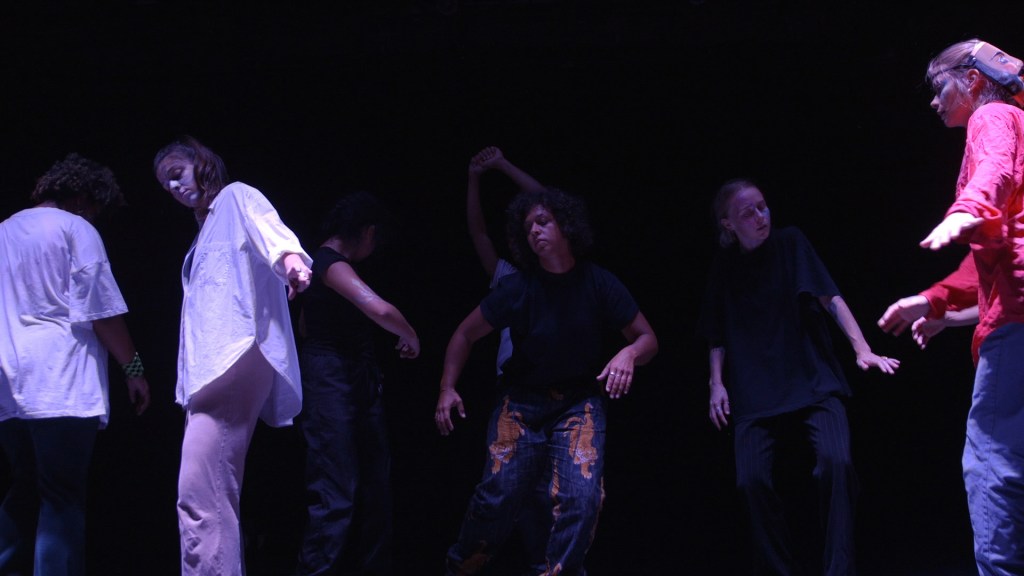
Dance theatre Based on personal testimonies responding to the question: “Can you describe migration and exile through images and feelings?” Movement becomes a container for lived experience.
Dansa för mig in collaboration with Valeria Monti Colque/Visual artistDansa för mig Performers engaged in a moment of connection during a choreographic intervention, highlighting themes of intimacy and collective expression.
Publications
Nobody Can Know Where to Go, If They Don’t Know Where They Come From
2022 Art & Choreography Book Author: Paloma Madrid Publisher: Rosales art and choreography Formats: Printed (IRL) & Digital ISBN: 978-91-987681-0-7
Nobody Can Know Where to Go, If They Don’t Know Where They Come From is an art and choreography book that brings together text, images, drawings, and choreographic scores to explore memory, migration, lineage, protest, and embodied knowledge.
The publication functions as a choreographic archive and research document, where the body is treated as both a political territory and a carrier of ancestral and contemporary histories. The book interweaves personal writing, collective voices, visual material, and movement-based structures, allowing choreography to exist beyond performance as a thinking, writing, and organizing practice.
Developed in close relation to long-duration performance and social choreography, the publication extends Madrid’s research on care, resistance, and transformation, positioning the book itself as a performative space.
The publication was produced with the support of Swedish cultural institutions and launched in connection with an exhibition and performance context.
Year: 2024 Choreographic Publication Author: Paloma Madrid in collaboration with Ninos Josef Publisher: Rosales art and choreography Institutional partner: MDT (Moderna Dansteatern), Stockholm, Sweden Formats: digital & printed (IRL)
dansaredansardansdansant is a polyphonic choreographic publication exploring dance as rhythm, repetition, language, and collective presence. Rather than documenting finished works, the publication foregrounds process, fragmentation, and bodily thinking, allowing choreography to unfold through text, visual composition, and performative logic.
Published as part of MDT’s Off-Stage: texts and publications program, the book positions choreography as an expanded practice that can circulate through reading, listening, imagining, and remembering. Language functions here as movement, and repetition becomes a choreographic strategy for producing meaning over time.
The publication contributes to contemporary discourse on dance as research, emphasizing accessibility, circulation, and the relationship between performance, publishing, and archival practice. Katalog_Final_2022_ok
Together, these publications frame choreography as a living, transmissible form of knowledge—capable of existing across bodies, books, performances, libraries, and digital platforms. They are integral to Paloma Madrid’s living archive, where artistic research continues through writing, reading, and embodied engagement.
How This Archive Lives
Through re-activation rather than preservation
Through relationships rather than objects
Through careful repetition, not accumulation
Through audiences becoming co-holders of the work
Each project can be revisited, re-performed, adapted, and shared across generations and contexts.
The eight eyed wheel-long durational performance 2022, photo:Mochino Production
Koreografiska interventioner-photo Petra Koppla Dahlberg
Pato negro/Black duck-short film 2019/20 photography Elisa Torres
Dansa för mig, photography Petra Koppla Dahlberg
Earlier Works — Foundations of the Living Archive (2005–2019)
A continuity rather than a past
The works gathered here are not closed chapters. They are ground layers—where methods, ethics, and questions first took shape and continue to resonate within the living archive today.
Across these years, my practice moved between theatre stages, domestic spaces, public squares, museums, television, and communities, developing choreography as a tool for relation, resistance, and care. What unites these works is an insistence on the body as a carrier of social memory, and on dance as something that happens with people rather than for them.
La Familia (2017) — Dance Theatre
A choreographic exploration of family as structure, fracture, inheritance, and survival. The work navigates intimacy and conflict, revealing how private relationships are shaped by larger political, cultural, and historical forces.
A large-scale outdoor performance staged outside Nacka City Hall. Bodies, machinery, and architecture meet in a work that questions labor, visibility, and who is allowed to occupy public space.
A participatory work created with residents of Fisksätra. A choreography of grief, collectivity, and belonging—where individual stories merge into a shared, fragile whole.
How many bodies are required to start a (r)evolution (2015)
A choreographic inquiry into mass, presence, and political agency. The work asks when a body becomes a force—and when many bodies become impossible to ignore.
Like a hawk stealing for the prey (2013) — Expanded choreography & installation
An early exploration of endurance, repetition, and surveillance. This work laid the foundation for later long-duration practices and the use of choreography as a living system. Photography Julia Peirone
An early declaration: everything is dance. Rooted in participation, everyday movement, and collective authorship—principles that continue to inform the living archive.
These works form the backbone of the archive—created for theatres, institutions, and communities, often in collaboration with non-professional performers and activists.
Selected works include:
Never Grow Old — Commission for Riksteatern, National touring theatre
Muslim Ban — Dramaten, Stockholm
Svenska Hijabis — Elverket / Dramaten
Snoppen blöder — Atalante, Unga Klara, Pride
Listen With Your Eyes — Community dance, Borlänge
Den politiska kroppen / Gender Hacker — MDT, Pride Uppsala
Pelo — Tango and torture, MDT, Stockholm
Disgusting Does Not Mean Undesirable — MDT, Stockholm
Together, these works shaped a practice grounded in participation, political urgency, and embodied knowledge.
Choreography for television — the body in the public sphere
When choreography enters the medium of television, questions of representation, access, and visibility become central. In these works, the moving image is not used as documentation, but as an extension of the choreographic practice—allowing embodied knowledge to circulate through living rooms, classrooms, and digital archives.
Svenska Hijabis
Choreography for television UR Play / SVT
A choreographic and performative work that makes space for Muslim women’s bodies beyond stereotype, surveillance, or explanation. Through movement, presence, and everyday strength, identity is not narrated—it takes place on its own terms.
The work continues to live as educational material within schools and public pedagogy, functioning as a corporeal counter-narrative within mass media.
Ladies First
Choreography for television Dramaten / SVT Play
Created together with leading Swedish female hip-hop artists—Linda Pira, Kumba, Rosh, Cleo, and others—this work gathers voices and bodies long marginalized within both cultural institutions and mainstream media.
Here, choreography becomes a collective positioning: a meeting point of performing arts, music, and activism, where movement operates as declaration, and the stage transforms into a space of shared power, sisterhood, and self-definition.
CURATED FESTIVAL INITATIVES
Norm-critical dance festival Curated by Paloma Madrid Moderna Dansteatern (now MDT), Stockholm 2005–2009
Underground Goes Overground was an annual norm-critical dance festival initiated and curated by Paloma Madrid. Created in response to exotification and colonial structures within the dance field, the festival challenged dominant ideas of authorship, representation, and access in contemporary dance.
The programme brought together experimental and research-based works rooted in forms such as flamenco, hip hop, tango, samba, and West African dance. Alongside the main stage at Skeppsholmen, the festival also took place at SITE, Telefonplan, during MDT’s renovation period.
As artistic director, Madrid used the festival as a platform to bring marginalized artistic practices into institutional visibility, questioning who owns contemporary art and who it is for.






 𝓟𝓪𝓵𝓸𝓶𝓪 𝓜𝓪𝓭𝓻𝓲𝓭